Month: September 2026

E108 What’s Next For School Districts Under Mirabelli and Mahmoud

E108 What’s Next For School Districts Under Mirabelli and Mahmoud

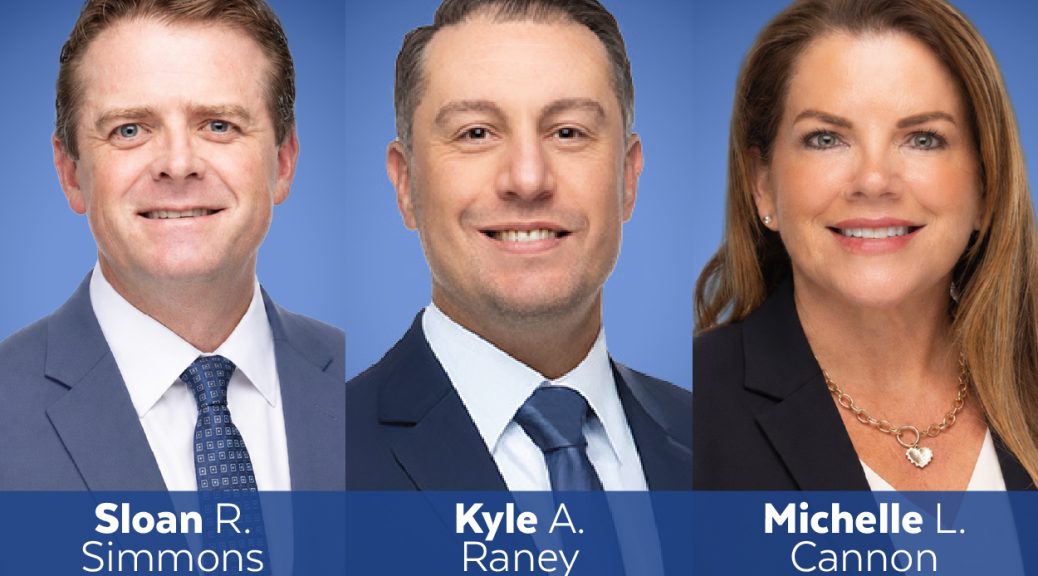
In this episode, host Michelle Cannon engages with Lozano Smith Litigation Practice Group Co-Chair Sloan Simmons and Student Practice Group Co-Chair Kyle Raney to discuss the current state of the law in California under Mirabelli v. Bonta and Mahmoud v. Taylor.  The discussion reviews developments and what is anticipated in the courts through the conclusion of 2026 in relation to these cases and parallel litigation, and covers best practices and policy options for school officials due to the current status of the law.

Show Notes & References

  • 1:34 – Case background: Mahmoud v. Taylor (2025) 606 U.S. 522 (Client News Brief 28 – July 2025)
  • 10:24 – Advice for local education agencies (LEAs) on how to respond to overly broad opt-out requests
  • 11:18 – Status of Mozert and Peloza cases (Mozert v. Hawkins County Bd. of Ed. (6th Cir. 1987) 827 F.2d 1058; Peloza v. Capistrano Unified School Dist. (9th Cir. 1994) 37 F.3d 517)
  • 12:25 – California Department of Education (CDE) guidance on Mahmoud
  • 12:38 – Case background: Mirabelli v. Bonta (2026) 607 U.S. 492 (Client New Brief 9 – March 2026)
  • 16:28 – Regino vs. Blake (E.D. Cal. Jan. 15, 2026) 2026 WL 121667 (now pending on appeal before Ninth Circuit)
  • 20:36 – Litigation before Ninth Circuit on Assembly Bill (AB) 1955; Chino Valley Unified School District, et al. v. Newsom, et al., Ninth Circuit Case No. 25-3686; City of Huntington Beach et al. v. State of California, Court of Appeals Case No. 26-25
  • 21:44 – Background on AB 1955 (Client New Brief 8 – March 2026)
  • 30:52 – Takeaways for LEAs on pending litigation cases
  • 32:26 – Recommendations for updating LEA policies and practices
  • 34:51 – More takeaways for LEAs and staff


For more information on the topics discussed in this podcast, please visit our website at: www.lozanosmith.com/podcast


Disclaimer: As the information contained herein is necessarily general, its application to a particular set of facts and circumstances may vary. For this reason, this podcast episode does not constitute legal advice. We recommend that you consult with your counsel prior to acting on the information contained herein.
E107 Public Service and Political Activity: Understanding the Boundaries

E107 Public Service and Political Activity: Understanding the Boundaries

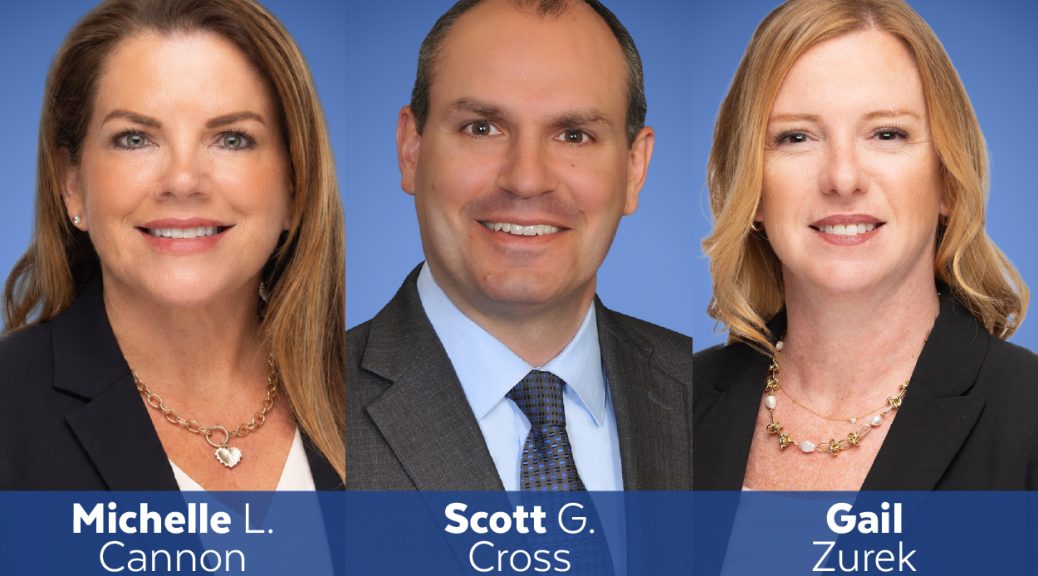
Public employees and officials have the right to participate in political activity, but important restrictions apply when personal advocacy intersects with public employment and agency resources. In this episode, host Michelle Cannon connects with Lozano Smith attorneys Scott Cross and Gail Zurek to discuss how public employees and officials can distinguish between permissible private political activity and conduct performed in an official capacity. The conversation explores campaign activity during work and personal time, the use of agency facilities and resources, political forums and campaign materials, and the rules governing uniforms, agency logos, and equipment. The discussion also examines how public agencies may provide neutral information about ballot measures without engaging in advocacy, along with restrictions involving campaign solicitations, political benefits, and the Levine Act.

Show Notes & References

  • 1:23 – Public employees and the right to participate in political activity
  • 2:27 – Differentiating between personal (private) activities vs. official (public) activities
  • 4:01 – Prohibited use of agency resources for campaign purposes (Government Code section 8314)
  • 4:23 – Examples of agency resources
  • 6:22 – The importance of where the political activity is taking place (public forums versus limited-public forums)
  • 10:08 – Considerations around public agencies hosting political forums and remaining viewpoint neutral
  • 12:00 – Distributing campaign materials on sidewalks in front of school grounds
  • 14:59 – Prohibition on participation in campaign event while wearing their agency uniform (Government Code section 3206)
  • 15:48 – Rules for teachers displaying campaign materials in the classroom
  • 19:44 – Ballot measures on local agency issues
  • 20:45 – Stanson v. Mott (1976) 17 Cal.3d 206 and Vargas v. City of Salinas (2009) 46 Cal.4th 1
  • 21:51 – Solicitation of campaign contributions (Government Code section 3205)
  • 23:11 – Offering benefits in exchange for political support (Government Code section 3204)
  • 24:07 – The Levine Act (Government Code section 84308)


For more information on the topics discussed in this podcast, please visit our website at: www.lozanosmith.com/podcast


Disclaimer: As the information contained herein is necessarily general, its application to a particular set of facts and circumstances may vary. For this reason, this podcast episode does not constitute legal advice. We recommend that you consult with your counsel prior to acting on the information contained herein.